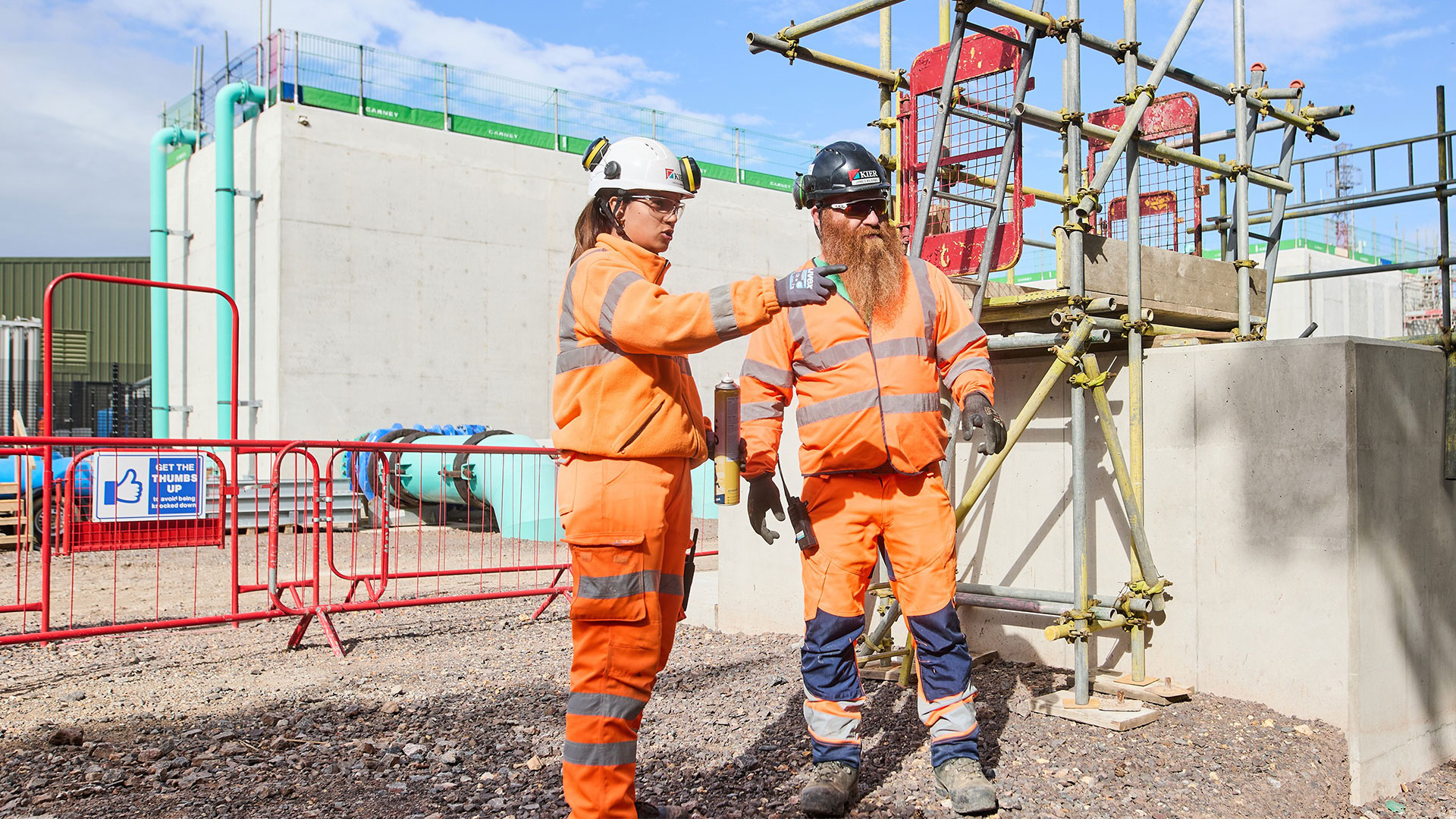


Kier is transforming Alderney Water Treatment Works into a modern process plant for Bournemouth Water and South West Water. The upgrade includes more than 2,000m of large diameter pipework, ceramic membrane treatment, granular activated carbon filters, chemical storage, chlorine contact and pumping infrastructure, helping strengthen water quality, resilience and treatment control for customers across Bournemouth Water’s supply area.
Large diameter pipework
2,000m
New granular
Activated Carbon
filter cells
Carbon media
1,200m3
Mike Homer, Project DirectorAlderney shows what strong collaboration can achieve on a live, operational water treatment works. By working closely with Bournemouth Water’s operational team and our design partners, we have been able to protect existing processes, manage critical interfaces with ageing infrastructure and keep the upgraded plant moving safely from construction into commissioning.
Modernising Alderney Water Treatment Works
Alderney Water Treatment Works has supplied water to Bournemouth for more than 100 years. Kier is now helping Bournemouth Water and South West Water transform the site into a modern process plant for the production of high-quality drinking water.
The upgrade is not a like-for-like replacement. It is a major transformation of a live, ageing works, bringing together existing infrastructure and new treatment technology to improve water quality, strengthen resilience and support future demand.
Since work began, the site has changed significantly. Early phases included the demolition of existing structures to create space for new treatment assets. Kier has since designed, built and commissioned more than 2,000m of large diameter pipework and constructed key assets that move water from reception, through treatment, and into service and storage in existing reservoirs.
The upgraded process includes flow balance tanks to manage peak flows, a ceramic membrane plant to provide an effective treatment barrier against microscopic parasites, a granular activated carbon plant containing more than 1,200m³ of carbon media, a chemical store building to support disinfection, and a chlorine contact tank and pump station to complete the treatment process before water enters supply.
Moving into commissioning
The introduction of granular activated carbon marks an important stage in the delivery of the upgraded works.
The carbon plant is not a standalone improvement. It forms an essential part of the wider treatment process and works alongside the ceramic membrane plant, chemical dosing, chlorine contact tank and pumping infrastructure to improve water quality, control and resilience.
More than 1,200m³ of carbon media has been loaded across several new concrete cells. The carbon helps remove contaminants such as pesticides and herbicides, while also improving taste and odour for customers.
Its installation also marks the shift from construction into process commissioning. By introducing the carbon media, the team can progress media washing, flow direction checks and integration with the wider treatment stream.
To support this phase, the team used an internal recirculation loop, allowing the granular activated carbon plant to be commissioned largely offline. This helped reduce risk to existing operations and maintain progress on a live works where water quality and operational continuity remained critical throughout.
Solving live-site challenges
Delivering the upgrade at Alderney has required careful planning, technical discipline and close collaboration.
The team is working within a live, ageing water treatment works, where existing processes must be protected while new assets are built, tested and brought into service. The project has involved constrained mobilisation, interfaces with ageing infrastructure, work around operational assets and careful planning around key connections into the existing treatment process.
A strong relationship with Bournemouth Water’s operational team has been central to delivery. Their site knowledge has helped the Kier team understand critical operational touchpoints, plan activity around live assets and respond quickly when programme challenges have emerged.
The same collaborative approach has shaped the relationship with design partners. By keeping buildability and sequencing at the centre of the design and delivery process, the team has been able to integrate advanced treatment technology into an existing works while maintaining focus on safety, quality and operational continuity.
Once complete, the upgraded Alderney Water Treatment Works will provide a stronger, more resilient treatment process for customers across Bournemouth Water’s area. The scheme will improve protection against cryptosporidium, strengthen treatment control and support the production of high-quality drinking water for the long term.
For Kier, the project demonstrates the value of combining complex live-asset delivery, commissioning, operational understanding and collaborative problem solving. It shows how major water infrastructure can be modernised without starting from scratch, retaining existing assets where appropriate while integrating the advanced treatment technology needed to support future resilience.